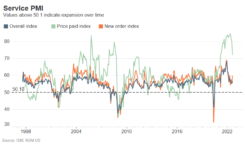
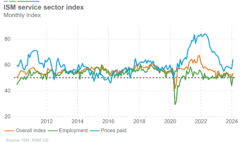
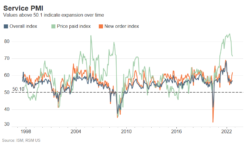
Business activity in the U.S. service sector has been expanding in recent months, with the ISM Business Activity Index rising to 61.7 in August from 59.1 in July.
Much of that growth reflected stronger demand, with new orders increasing to 60.9, the highest reading since February 2023.
Tariff refunds, improving business conditions and easing wage pressures have been the biggest tailwinds for the sector, while the ISM report noted that tariffs remained among the most cited issues affecting supply chains.

We expect services to continue leading overall economic growth in the next quarter, offsetting some of the drag from net exports, as the trade deficit widened to $88.6 billion in July from $71.2 billion in June.
Inventories will also be a key component of a strong rebound in third-quarter GDP, with the Atlanta Fed’s GDPNow estimate standing at 4.8% as of Sept. 1. According to the service sector data, inventories picked up at a faster pace in August, with the ISM Inventories Index rising to 56.7 from 51.4.
That said, overall price pressures also increased, with the ISM Prices Index rising to 72.6 in August from 70.3 in July. Rising demand, together with higher input costs, will remain a concern for inflation.
If anything, the data released on Thursday will most likely increase the odds of a rate hike in September, with markets pricing in roughly even odds of a 25 basis-point increase.
Even though the ISM manufacturing and services data released this week are considered soft data, we do not think the Fed will look through them given the significant pressure on prices.
At this point, as the economy continues to grow at a solid pace, the Fed has placed greater priority on price stability. From now until the meeting on Sept. 15-16, we believe inflation data, especially CPI and PPI, will largely determine whether policymakers choose to hike or hold.